-
1. Place the pork neck bones in a large pot, cover with cold water, and bring to a vigorous boil over high heat. Boil for 5 minutes, then drain and rinse the bones thoroughly under cold water to remove any scum and impurities. Clean the pot.
1.5 kg Pork neck bones
-
2. Return the blanched bones to the cleaned pot and add enough cold water to cover generously — about 3 litres. Bring to a ROLLING boil (not a simmer — vigorous boiling is essential to emulsify the fat and create a milky, creamy tonkotsu broth). Add the garlic cloves, ginger slices, and the white and light green parts of 3 scallions. Boil hard for 8–10 hours, topping up with hot water as needed to keep bones submerged. Skim scum during the first 30 minutes only.
1.5 kg Pork neck bones,
8 clove Garlic cloves,
5 slice Fresh ginger,
6 piece Spring onions (scallions)
-
3. While the broth cooks, prepare the chashu. Roll the pork belly tightly into a log and tie with kitchen twine at 2 cm intervals. Heat the neutral oil in a heavy oven-safe pan or Dutch oven over medium-high heat and sear the pork belly roll on all sides until deeply golden, about 8 minutes total.
600 g Pork belly, skin-on,
2 tbsp Neutral oil (vegetable or canola)
-
4. Add the soy sauce, mirin, sake, and sugar to the pan with the seared pork. Add enough water to come halfway up the pork. Bring to a simmer, cover tightly, and braise on the lowest heat for 2.5 hours, turning the pork every 30 minutes, until very tender and deeply glazed. Remove pork from the braising liquid and let cool. Reserve the braising liquid — this becomes your tare (seasoning sauce).
6 tbsp Soy sauce,
4 tbsp Mirin,
4 tbsp Sake,
1 tbsp Sugar
-
5. Once the pork belly is cool enough to handle, remove the twine and slice into 1 cm rounds. For extra caramelization, sear slices briefly in a hot dry pan or under a broiler for 1–2 minutes per side just before serving.
600 g Pork belly, skin-on
-
6. Bring a small saucepan of water to a full rolling boil. Using a spoon, gently lower the eggs in one at a time (straight from the fridge is fine — do not adjust timing). Boil for exactly 6 minutes and 30 seconds for a jammy, just-set yolk. While the eggs boil, prepare an ice bath. Immediately transfer eggs to the ice bath and cool for 5 minutes. Peel carefully.
4 piece Large eggs
-
7. Marinate the peeled eggs in the reserved chashu braising liquid for at least 2 hours (or overnight in the fridge) for deeply flavored, amber-tinted ramen eggs.
4 piece Large eggs
-
8. When the broth is done, strain it through a fine mesh sieve, discarding solids. You should have about 1.5–2 litres of rich, milky broth. Return to the pot. Whisk in the white miso paste and sesame paste into a ladle of hot broth until smooth, then stir back into the pot along with the sesame oil, salt, and white pepper. Taste and adjust seasoning. Do not boil after adding miso.
2 tbsp White miso paste,
2 tbsp Sesame paste (tahini),
1 tbsp Toasted sesame oil,
1 tsp Salt,
0.5 tsp White pepper
-
9. Cook the ramen noodles according to package instructions in a large pot of well-salted boiling water until just al dente (usually 1–2 min for fresh, 3–4 min for dried). Drain immediately — do not rinse.
400 g Ramen noodles (fresh or dried)
-
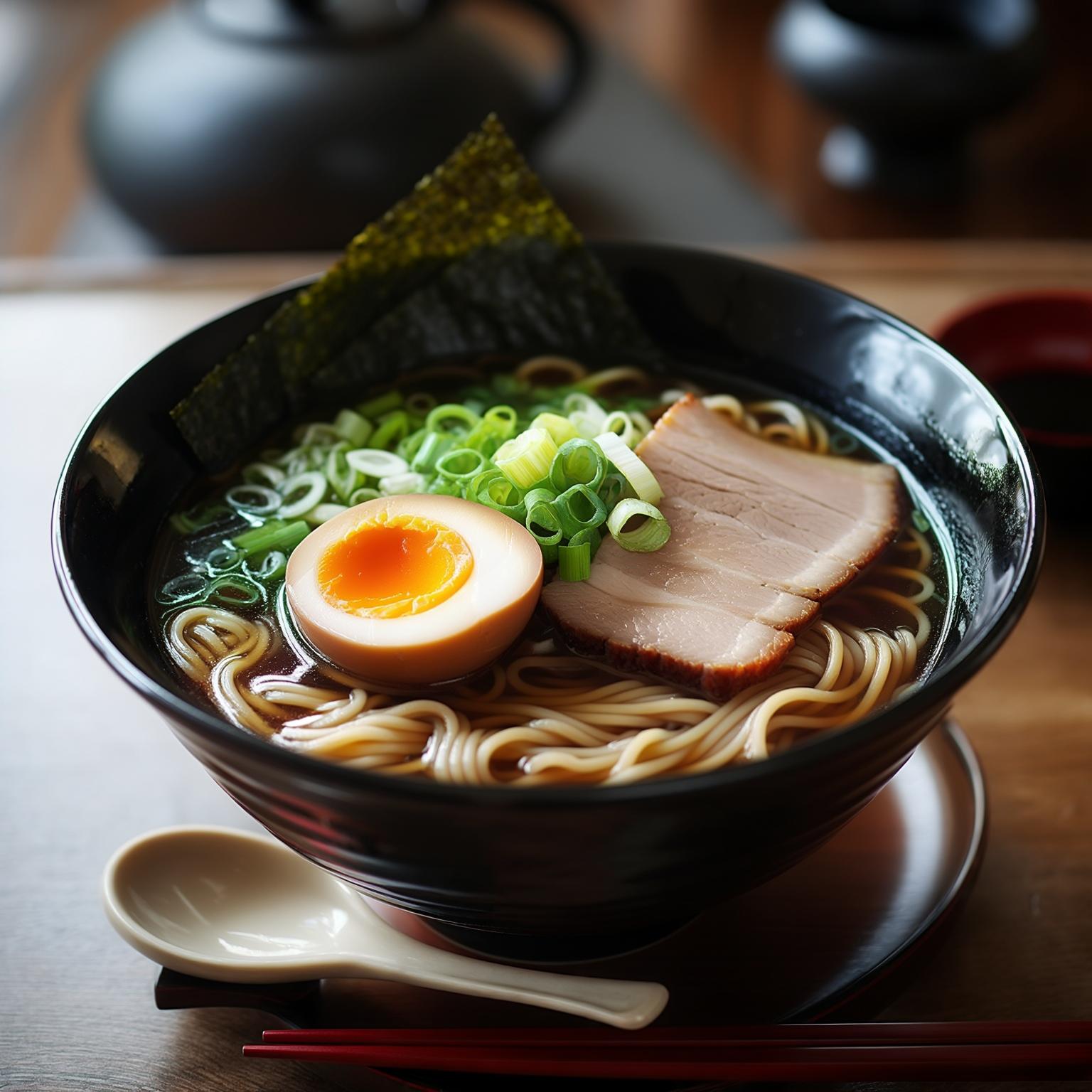
10. Divide noodles between 4 deep bowls. Ladle hot broth over generously. Top each bowl with 2–3 slices of chashu pork, a soft-boiled egg halved lengthwise, bamboo shoots, thinly sliced dark green scallion tops, and a sheet of nori standing upright against the side of the bowl. Serve immediately.
6 piece Spring onions (scallions),
4 piece Large eggs,
200 g Canned bamboo shoots, drained,
4 piece Nori sheets
 By james
